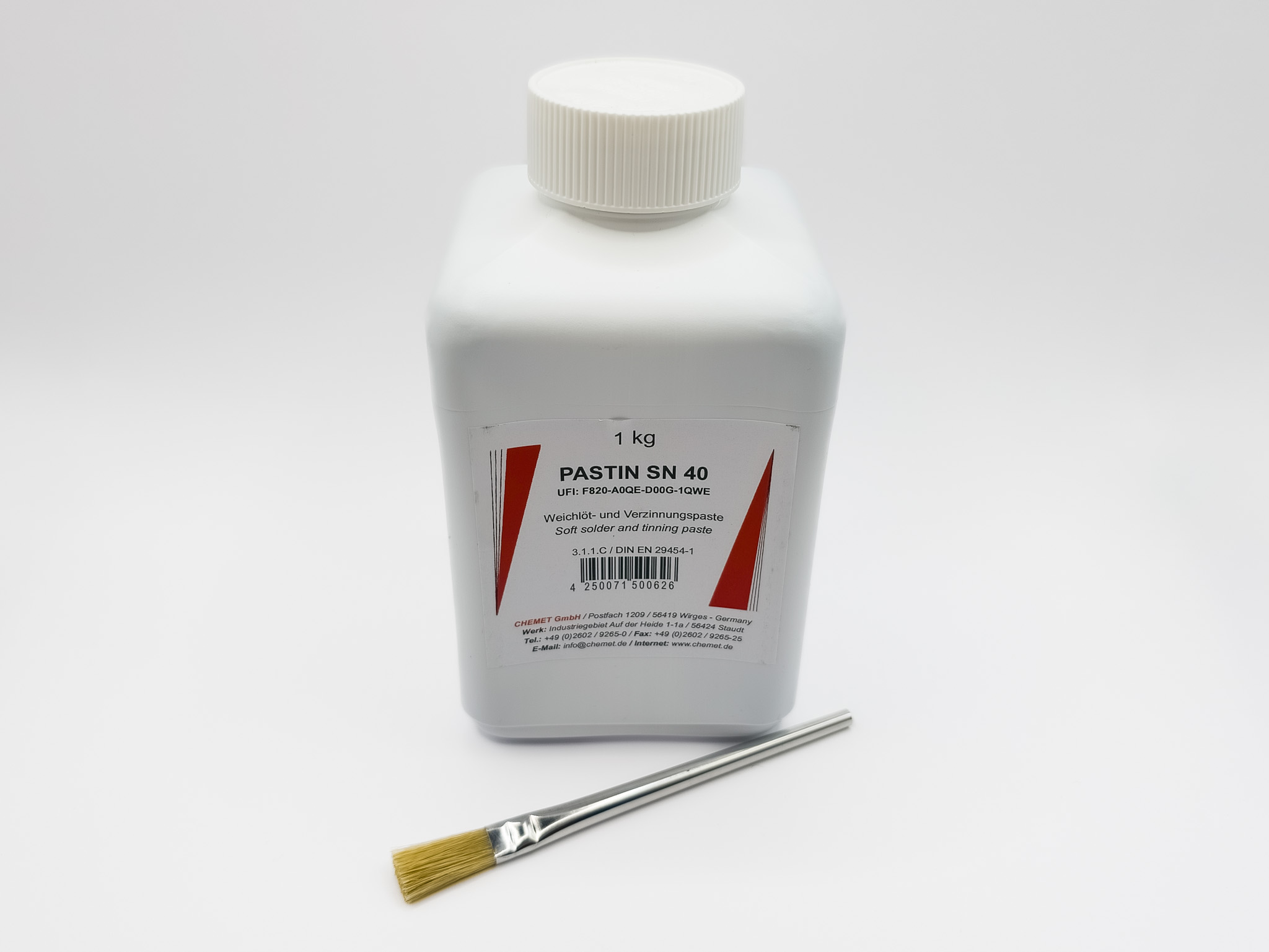
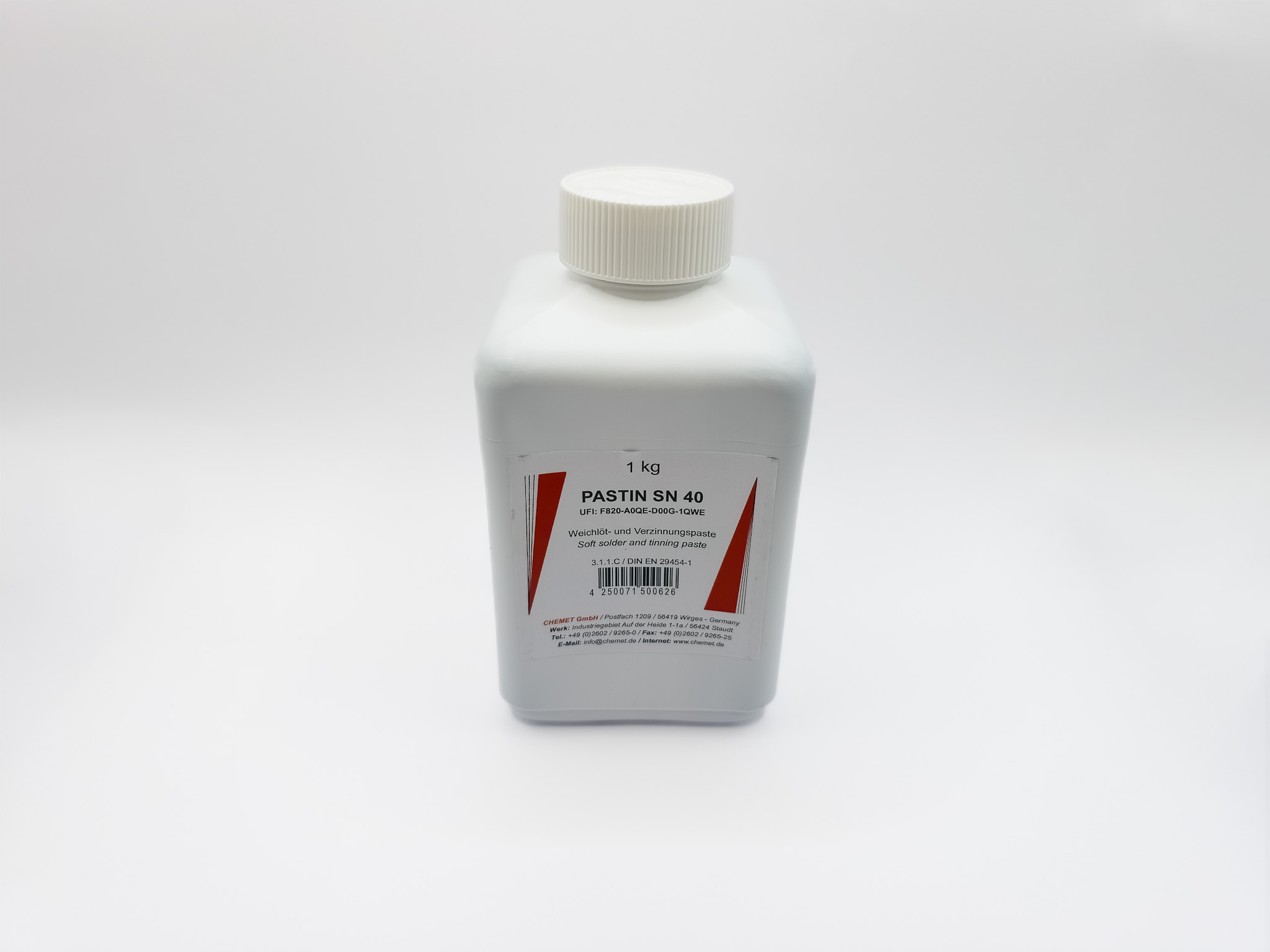
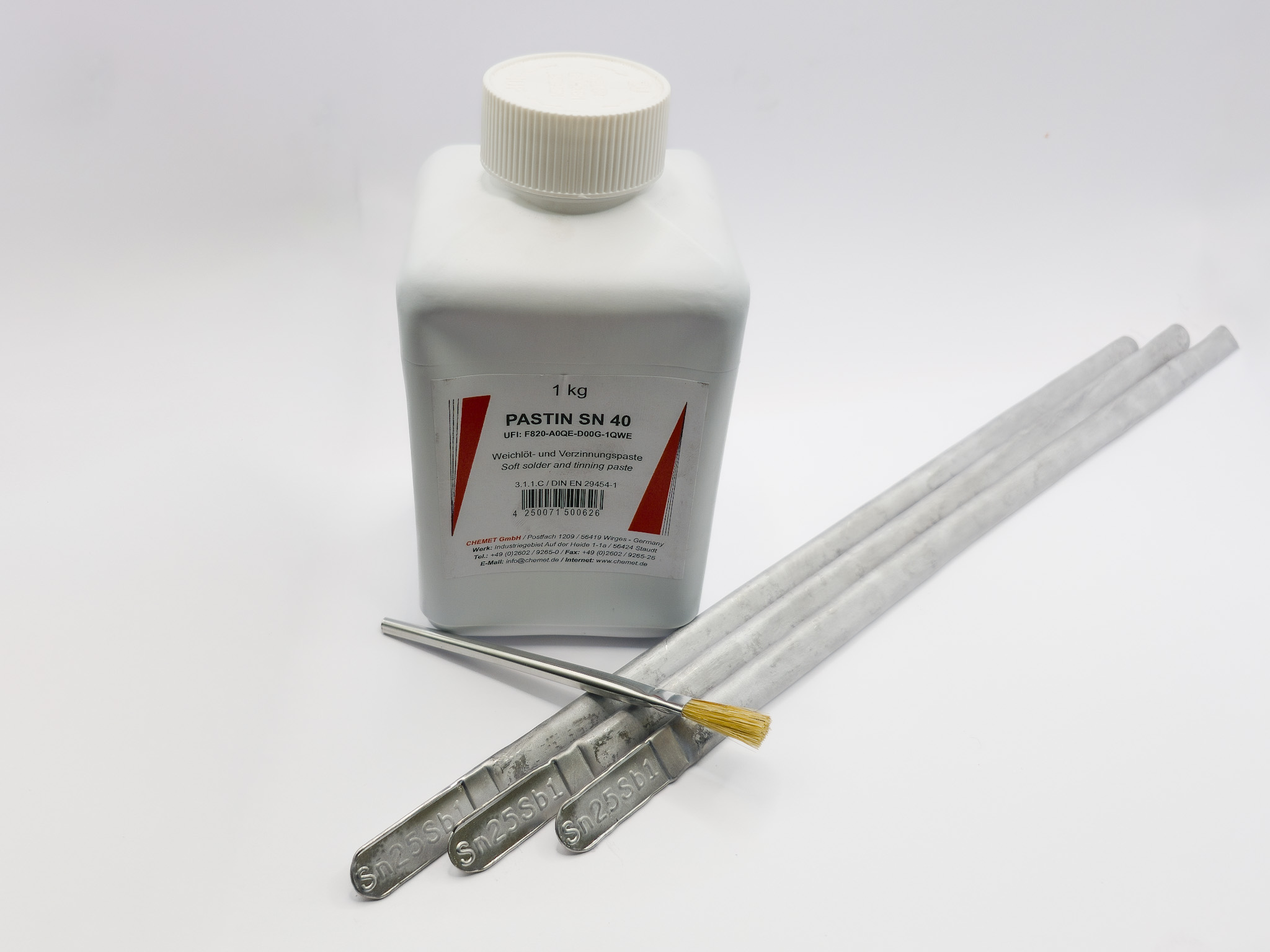
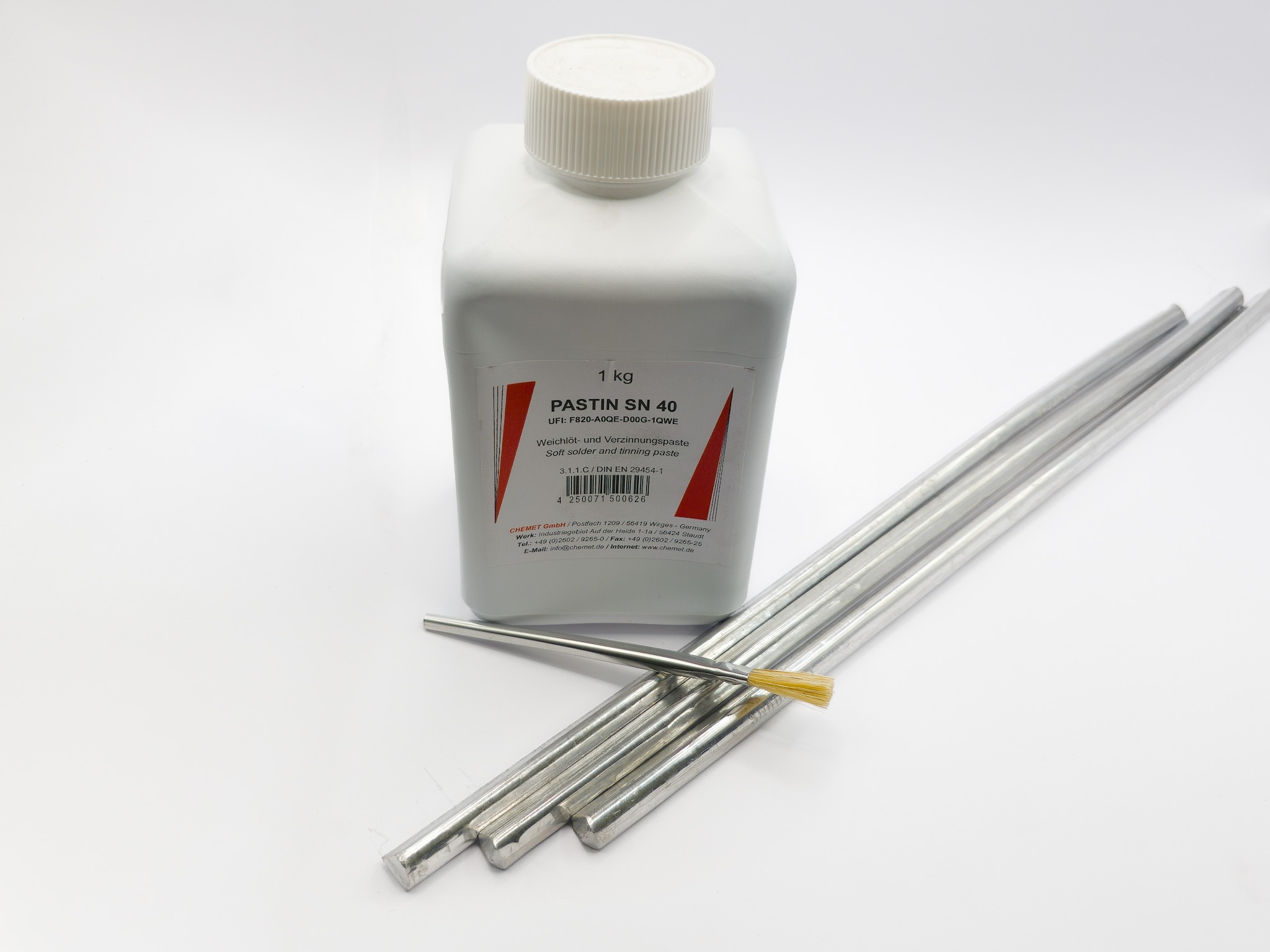
The tinning paste Pastin 40 enables fast and clean tinning of surfaces made of copper, copper alloys or steel. Although Pastin 40 is relatively universally applicable, it should only be used in combination with lead-containing tin solders such as SnPb40, SnPb37 or Pb74Sn25Sb1 (body solder).
Before application, the paste should be stirred or shaken briefly again. Then the paste can be applied to the surface to be tinned with the brush. Subsequently, the paste is carefully heated with a flame until liquid PbSn40 drops and hydrochloric acid form on the surface, which ideally prepares the surface locally for tinning. The PbSn40 drops must be quickly spread with a lint-free cloth. Afterwards the surface is tinned. Only spread the tin when the paste has completely reacted. Afterwards, you can continue working directly with the appropriate solder. The acid produced during the reaction is corrosive and must be rinsed off with water or mordant shortly after the tinning/soldering process.
Surfaces that are prepared with pre-tinning pastes can be soldered or tinned very well and cleanly.
In the bodywork area, Pastin 803, which is optimized for lead-free solders and for SnCu3 copper pipe installation, should be used.
In the field of copper dish tinning and generally as a universal lead-free tinning paste, Pastin 100 is very well suited.
The Pastin 830 is ideally suited for soldering or tinning with tin-silver solders.
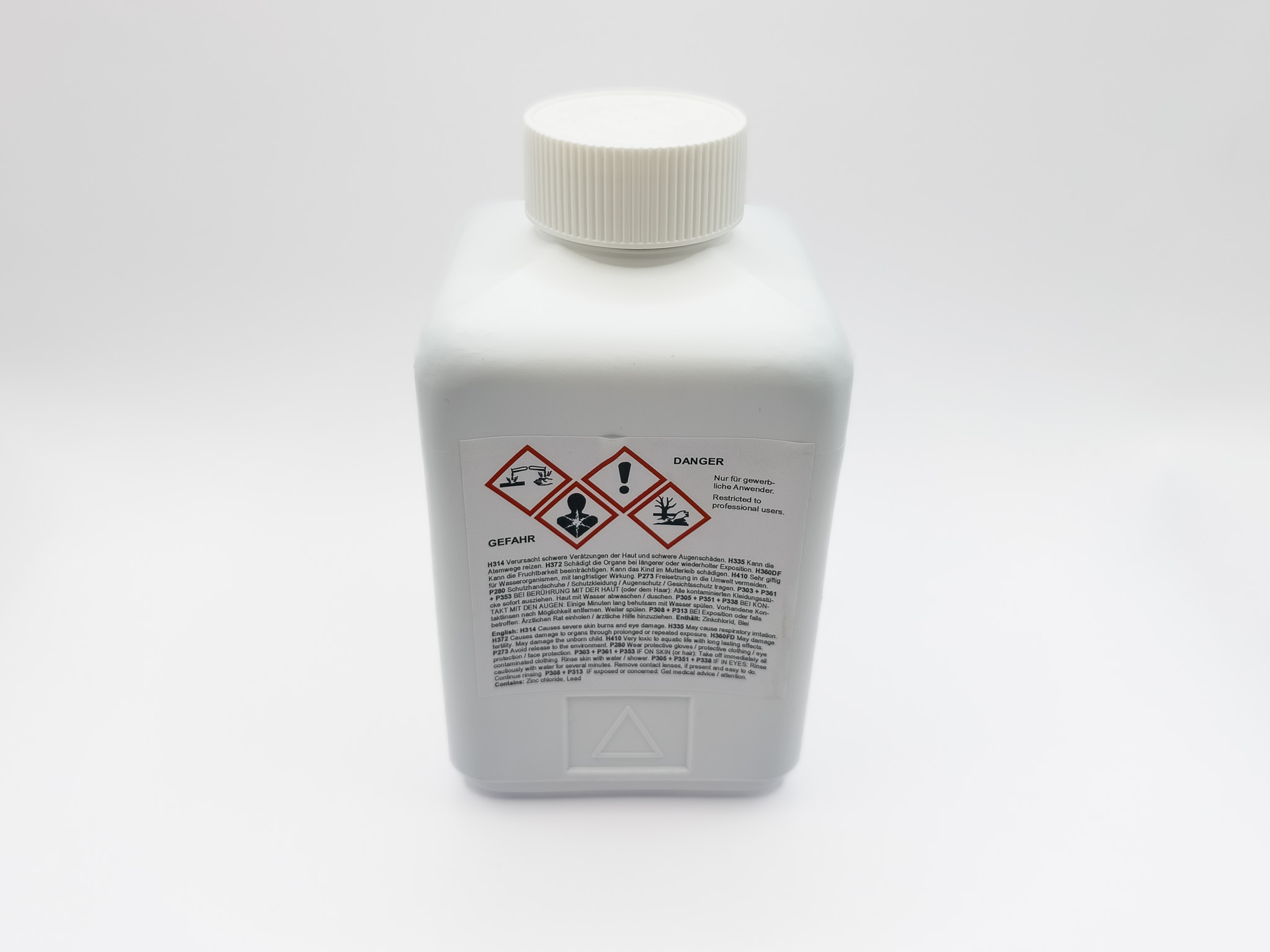
During processing, effective extraction/fresh air supply, e.g. also by ventilation, must be ensured due to the soldering fumes.
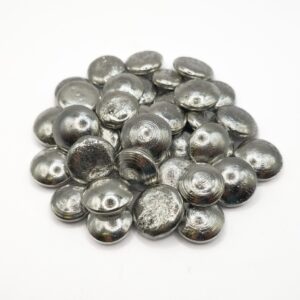
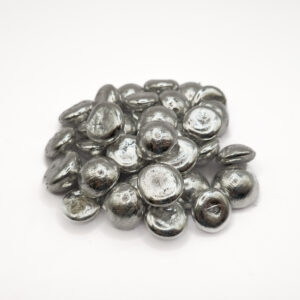
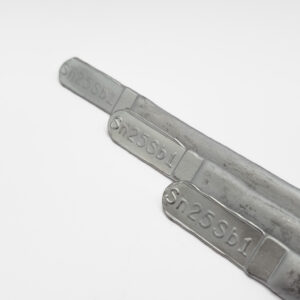
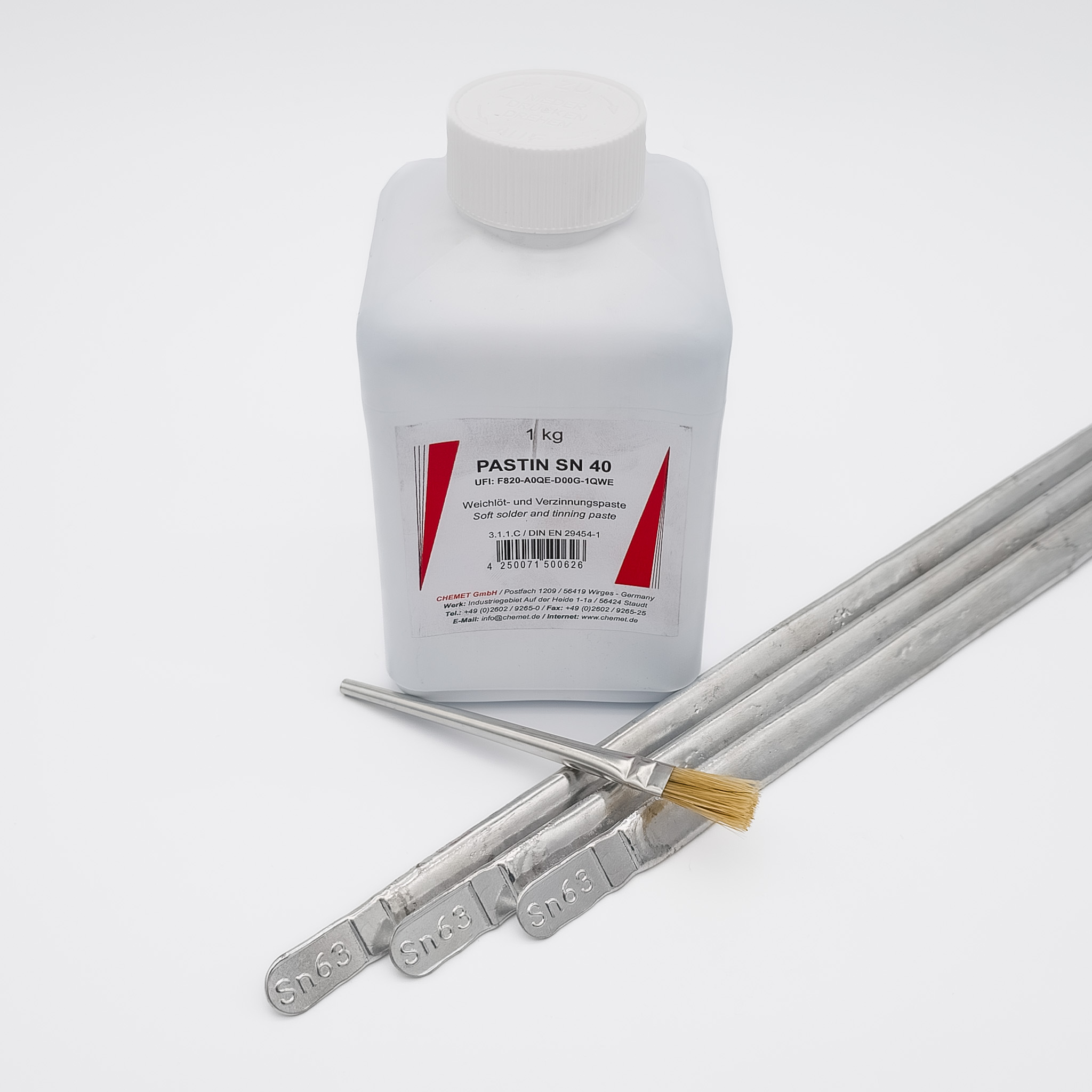
Pastin 40 is available in an attractive combination with triangular rods made of the solders SnPb40, SnPb37 and the body solder Pb74Sn25Sb1.