Casting pewter figures step by step
To cast pewter figures, you pour liquid metal into a mould that defines the shape. Unlike New Year’s Eve lead pouring, this does not result in a random shape. The six steps below assume a self-made silicone mould, which should rest for about three days before the first cast. Use a metal with a casting temperature below the mould’s thermal limit. Because molten metal can splatter if it hits moisture, ensure the mould, tools, and metal remain dry; wear safety goggles and heat-insulating gloves. Dust the dry silicone mould with talcum powder, preheat the casting ladle, melt the metal, and pour it into the mould. Once solidified, remove the figure and deburr it.
Contents
Equipment for casting pewter figures
For small figures, a steel casting ladle is sufficient. Our casting ladles are suitable for tin, bismuth, zinc, and aluminium up to approximately 800°C, and their 350 mm handle keeps your hand at a distance from the melt. Even with low-melting metals, it is worth using a ladle coating to brush the ladle before casting. If casting zinc, apply the coating frequently and generously, otherwise the steel of the ladle will alloy with the zinc.
For larger quantities, melting crucibles are available. Among our crucibles, the graphite crucibles without a spout are particularly suitable for beginners and spontaneous casting projects due to their good price-performance ratio. You will also need a tool to grip and pour the hot crucible. Slag binder, a foundry auxiliary, is not required for low-melting alloys based on tin, lead, or bismuth.
Additionally, you will need a heat-resistant surface, a heat source on which the ladle or crucible stands securely, and the protective equipment mentioned in the safety section. You also need a measuring device for the temperature of the melt. Only then can you check whether the melt has reached the casting temperature of your metal and remains below the thermal limit of your mould.
The right casting mould
For metals with a casting temperature up to 400°C, we recommend silicone rubber moulds in our guide to sand mould making, as a sand mould requires a lot of effort relative to the number of possible casts. This 400°C is also the load limit of our silicone rubber. A sand mould is destroyed during demoulding, whereas a silicone mould is a permanent mould that you can reuse.
How much heat a silicone mould can withstand depends on the material. Our heat-resistant silicone rubber can withstand loads up to 400°C, briefly tolerates a maximum of 450°C during pouring, and is intended for moulds cast with tin, lead, and bismuth alloys. For moulds made of this silicone rubber, choose a metal with a casting temperature below these values. For other silicones, the specifications of the respective material apply.
For the mould, you need a model—an existing figure that you replicate. Even with a flat back, we recommend a two-part mould in our free guide to silicone mould making. An open mould leaves a misshapen surface on the open side, and the dimensions of the figure may vary. You can find materials from mould boxes to release agents in accessories for silicone moulds; for beginners, there is the small mould-making set for silicone moulds.
Two points are important for planning. The model will not look exactly the same after moulding. If you need the original back in pristine condition, make a copy by other means beforehand. Additionally, the finished mould should rest for about three days before the first cast to ensure it lasts longer. Both points are described in more detail in our guide to silicone mould making.
The right metal for pewter figures
Pure tin as a casting metal with a purity of Sn99.9 is frequently used for figures. Pure tin melts at just under 232°C. As pellets or granules, it is easy to portion, whereas ingots are harder to dose.
In the tin alloys for mould casting category, you will find two alloys that are stronger than pure tin. Sn95Sb3Cu2 (listed in the shop as SnSb3Cu2) has a melting range up to 248°C, is cast at 300°C, and is very suitable for figures. Sn98Sb2 (listed in the shop as SnSb2) has a lower melting range than Sn95Sb3Cu2 and is less prone to segregation—where components distribute unevenly during solidification. In terms of strength, Sn98Sb2 lies between pure tin and Sn95Sb3Cu2. For Sn98Sb2, the recommended casting temperature is 280 to 300°C.
The same category also includes the bearing metal WM80. It contains 2% lead, and its recommended casting temperature of 450 to 520°C is at or above what the mould can briefly withstand. Therefore, WM80 is not a good choice for figures in moulds made from our heat-resistant silicone rubber.
The bismuth-tin alloy BiSn42 melts at just 138°C and is suitable for small parts. In our guide to silicone mould making, a 5 cm high soldier is moulded; the cast shown is made of BiSn42. However, the alloy is brittle and hardly cold-formable, so thin parts of a figure may break when bent after casting.
If the figure should be as strong as possible, use Sn95Sb3Cu2. If it should remain softer, use pure tin. If you want an alloy that is stronger than pure tin and less prone to segregation, Sn98Sb2 is a good option. For metals without a specified casting temperature, it is best to clarify the value with us before the first cast. For small figures without thin parts that need to be bent afterwards, BiSn42 remains an option.
Lead in casting metals
Anyone who repeatedly puts lead-containing objects in their mouth risks serious and permanent disorders of the nervous system, behavior, and development. Children are particularly vulnerable. Casting involves a second risk: when lead is heated, toxic fumes form that can be inhaled.
For casting at home, it is best to choose a metal for which we do not specify lead in the composition. You can recognize lead as an alloying component by the abbreviation Pb. In SnPb37, which we only supply to commercial customers, it is already in the name; in the bearing metal WM80, it appears in the full designation Sn80Sb12Cu6Pb2.
The following rule applies to products intended for the general public. According to the European chemicals regulation REACH, they may not be placed on the market if two conditions are met. Firstly, the lead content is 0.05% by weight or more, based on the weight of the product or an accessible part. Secondly, children can put the product in their mouth during normal or reasonably foreseeable use. It is considered mouthable if one of its dimensions is less than 5 cm or if a detachable or protruding part has this size. Exceptions include products covered by the Toy Safety Directive. There, the directive limits not the lead content, but how much lead may be released from the material. For figures that come into children’s hands, the recommendation above applies: choose a metal for which we do not specify lead in the composition.
Safety before the first cast
Moisture poses a danger. If the melt hits water or moisture, the volume of the water increases due to the high temperature. The resulting steam greatly increases the pressure, and the melt can splatter. Therefore, only dry moulds, dry tools, and dry metal should come near the melt, and as long as the metal is liquid, do not cool the mould or metal with water.
Wear safety goggles, heat-insulating gloves made of non-flammable material, and clothing that is not made of easily melting synthetic fibers. This equipment is mandatory in foundries and is a sensible standard for the home workbench. Only allow children and adolescents to cast under the supervision of an adult.
Casting pewter figures in six steps
Once the metal, mould, and tools are ready and you are wearing your protective equipment, the casting follows.
- Keep the silicone mould absolutely dry before every cast and dust the cavities with talcum powder. Talcum acts as a release and flow agent and improves the casting quality and the lifespan of the mould. Then, place the halves together precisely.
- Brush the casting ladle with the ladle coating and heat it before it comes into contact with the melt so that all water evaporates. If working with a crucible, the crucible and gripping tool must be equally dry.
- Completely melt the metal in the crucible or directly in the ladle. If melting in a crucible, bring the ladle to the temperature of the melt before scooping by dipping it and leaving it in briefly.
- Bring the melt to the casting temperature of your metal—280 to 300°C for Sn98Sb2, or 300°C for Sn95Sb3Cu2. If no casting temperature is specified for your metal, use the value you clarified beforehand. For moulds made of our heat-resistant silicone rubber, stay below 400°C and do not exceed 450°C even briefly. Then pour the liquid metal into the gate—the opening of the mould—until it is filled.
- Allow the metal to solidify in the mould without cooling the mould or metal with water.
- Carefully open the mould, remove the figure, and remove the sprue—the metal solidified in the gate. Deburr the edges with a file or fine sandpaper. You can then prime and paint the figure.
Materials and shipping for your first cast
We deliver pure tin, alloys, silicone rubber, and casting tools free of shipping costs within Germany.
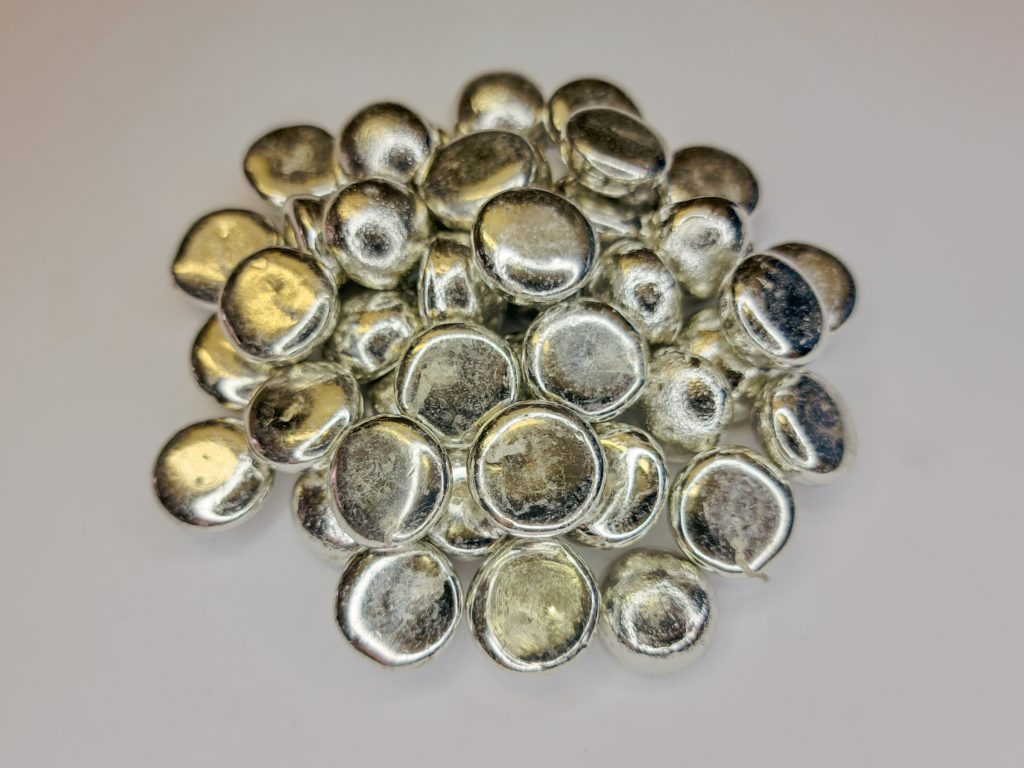 Pure Tin Pellets Sn99.9
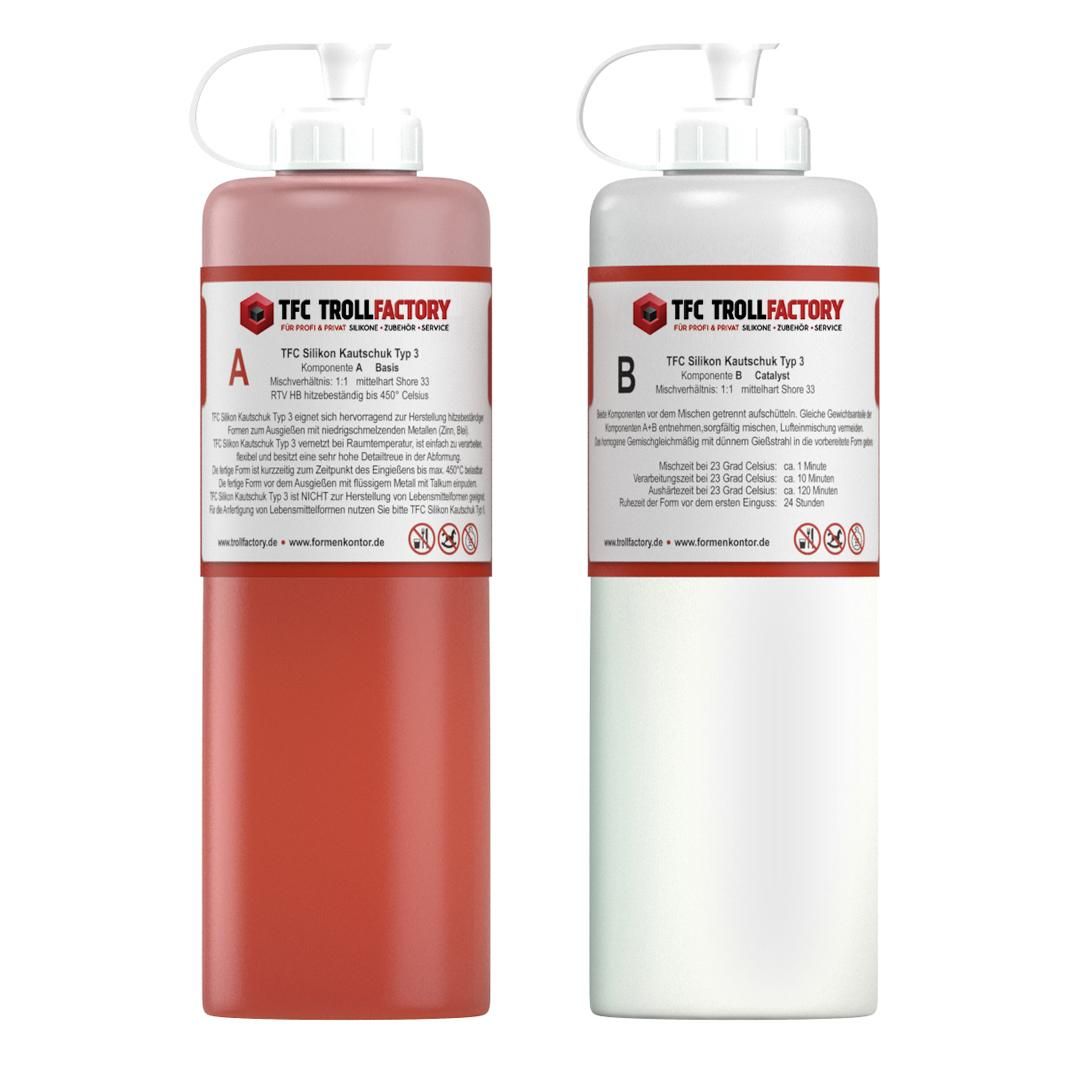 Heat-Resistant Silicone Rubber
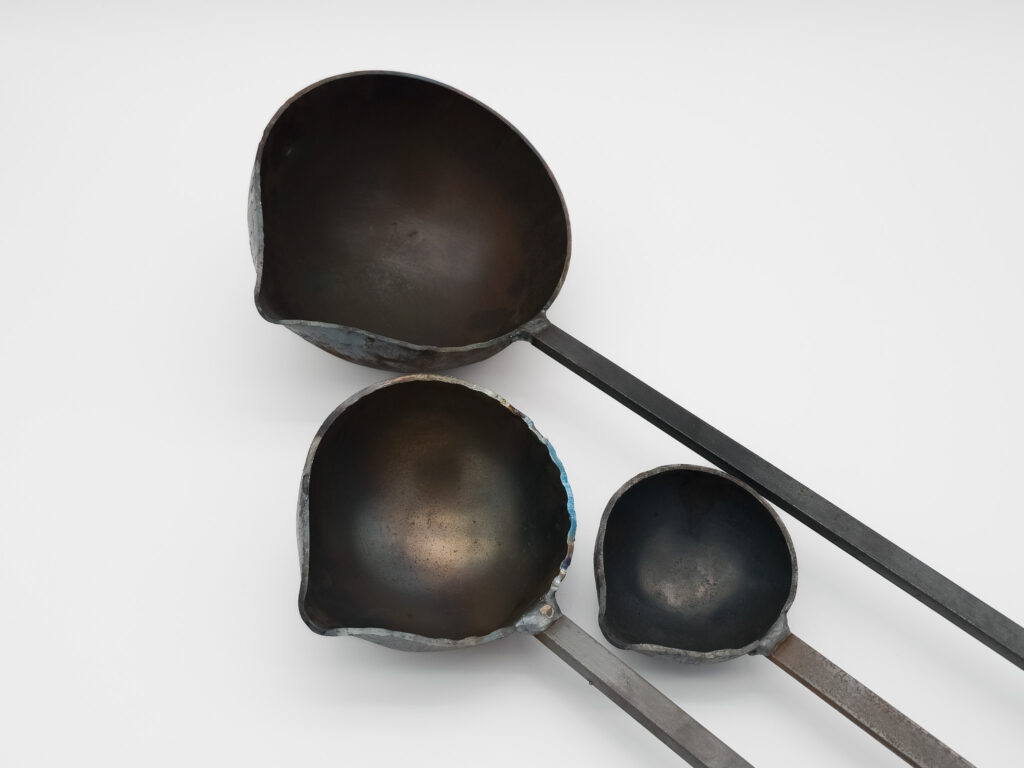 Casting Ladle
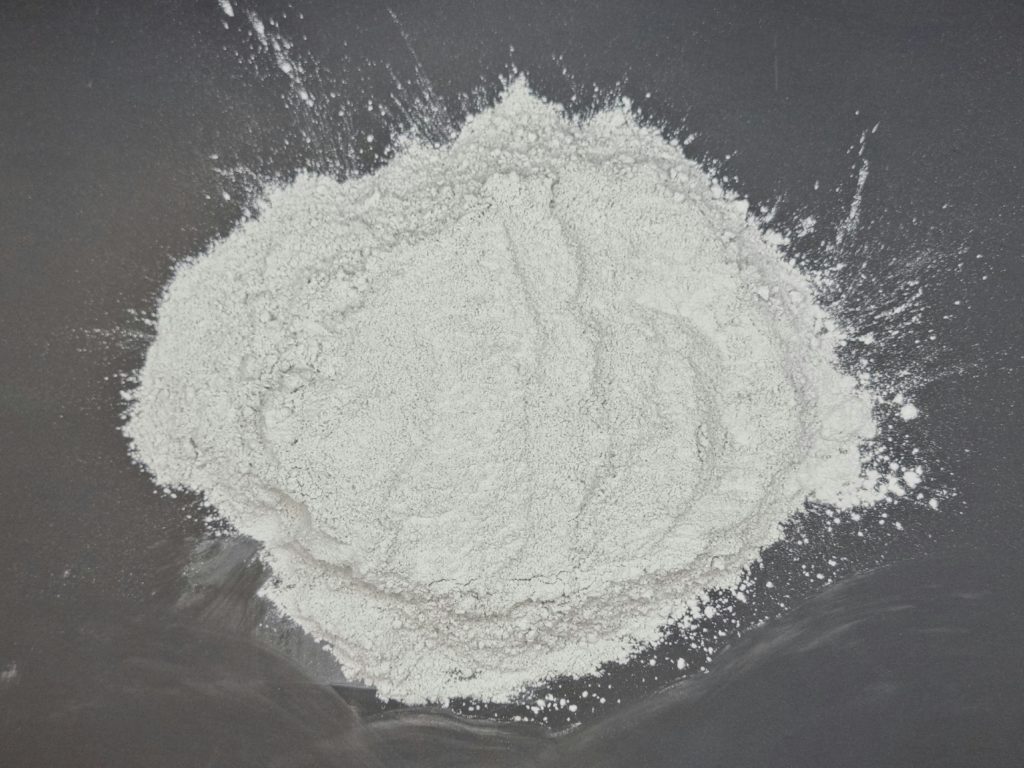 Talcum Powder