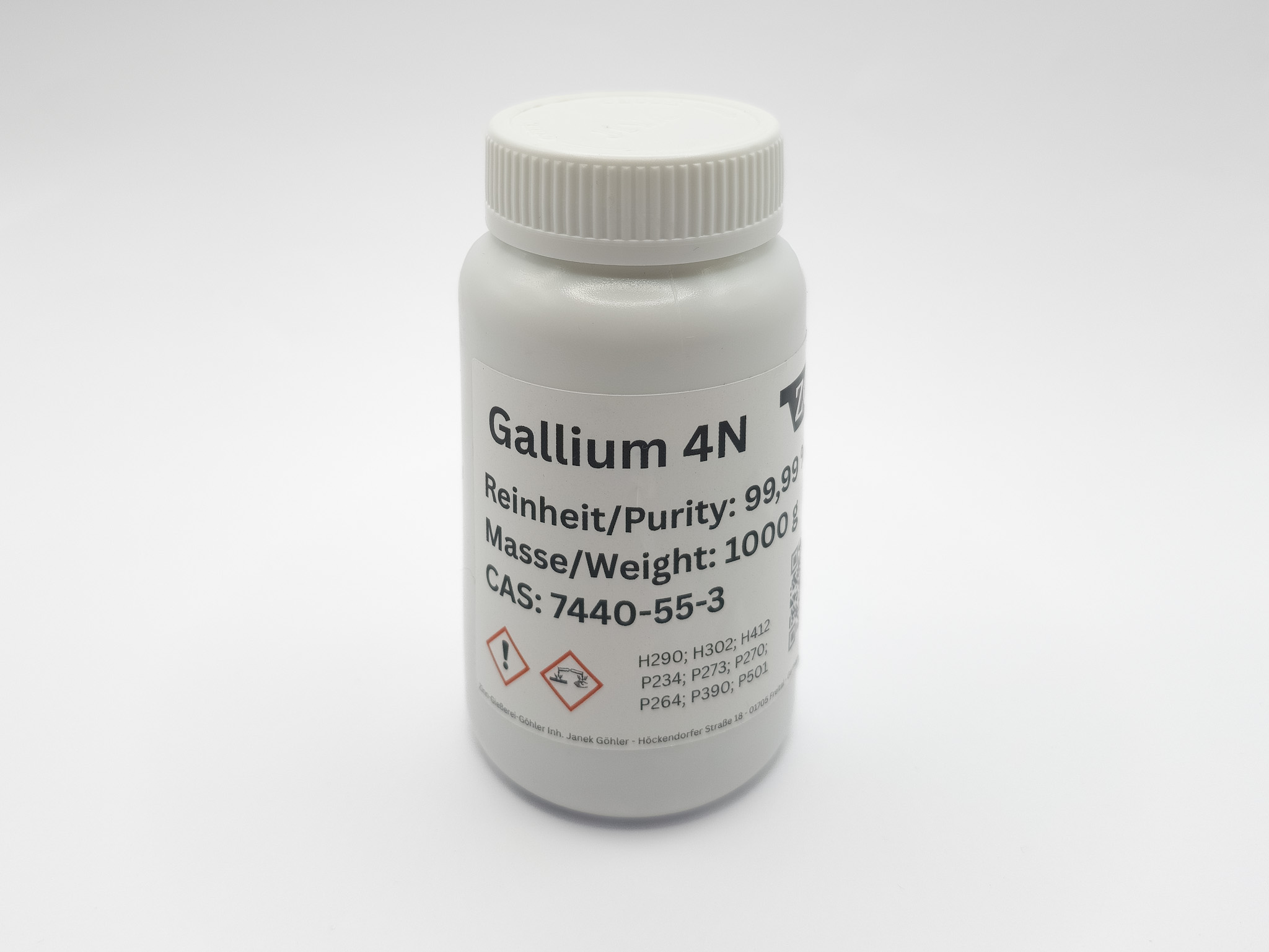
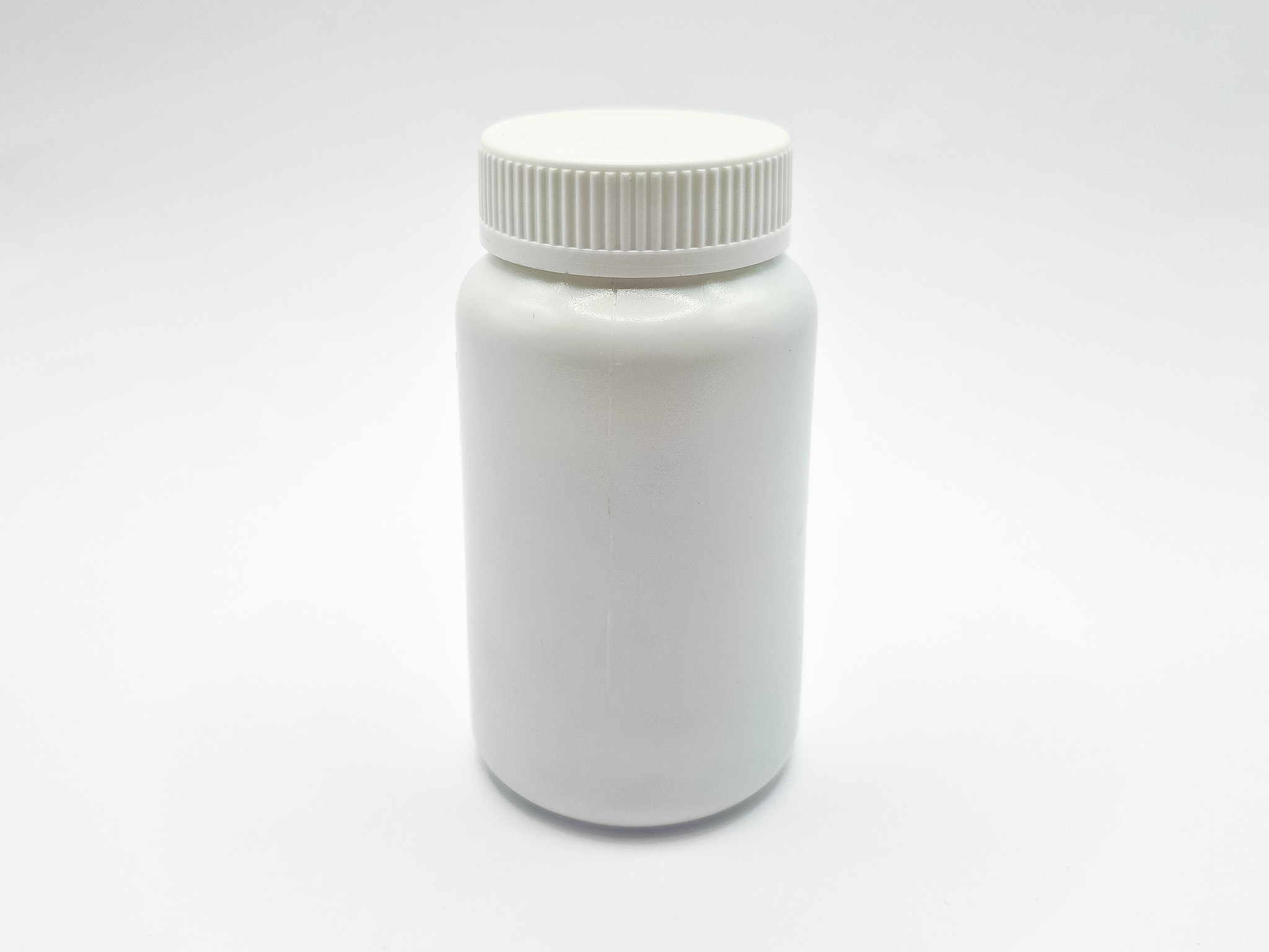
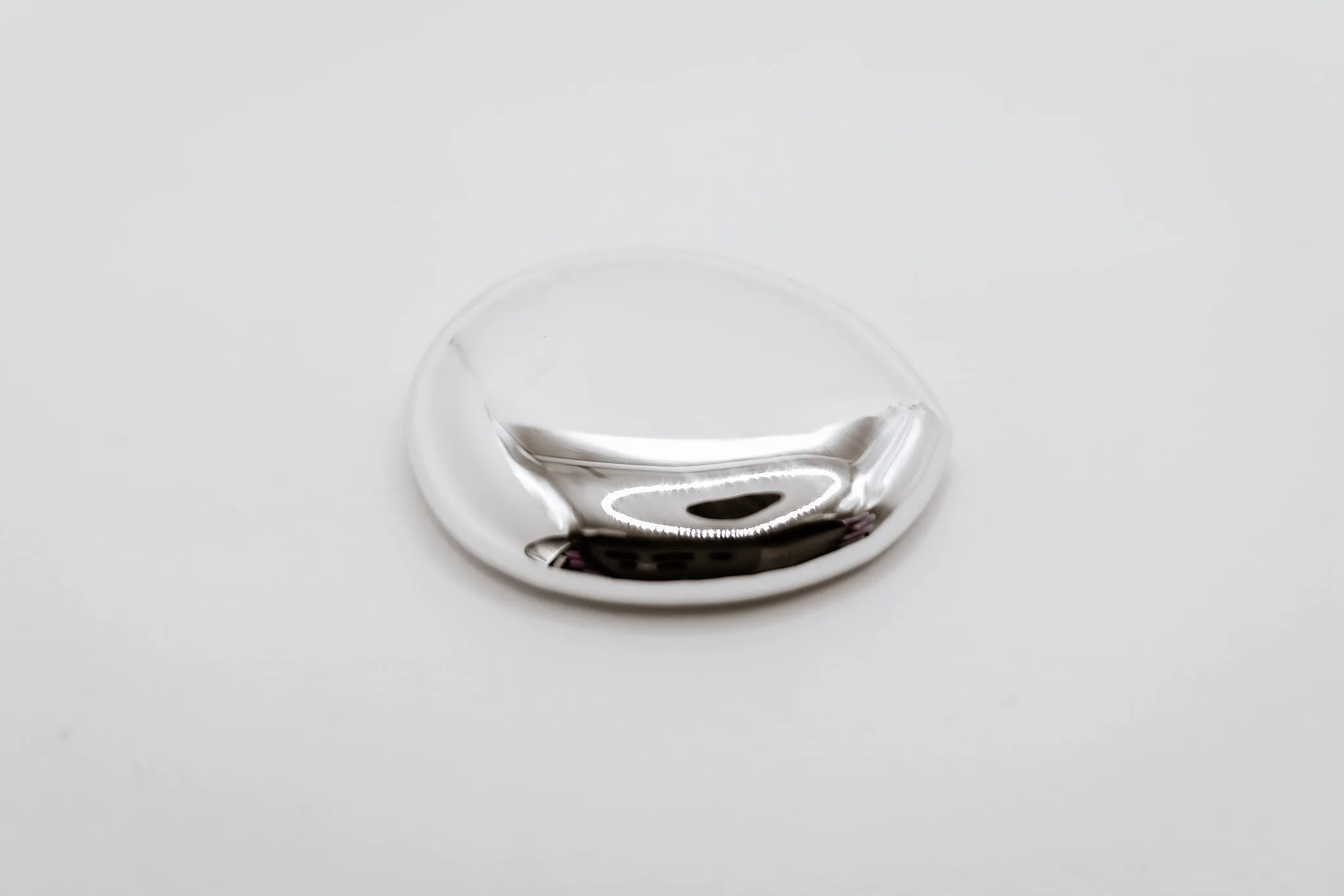
Gallium 4N Ga99.99 in 1kg bottles with certificate
- Purity: 99.99% (4N)
- Bottled
- Weight: min. 1000 g
- Melting Point: 29.76 °C
- Density: 5.9 g/cm³
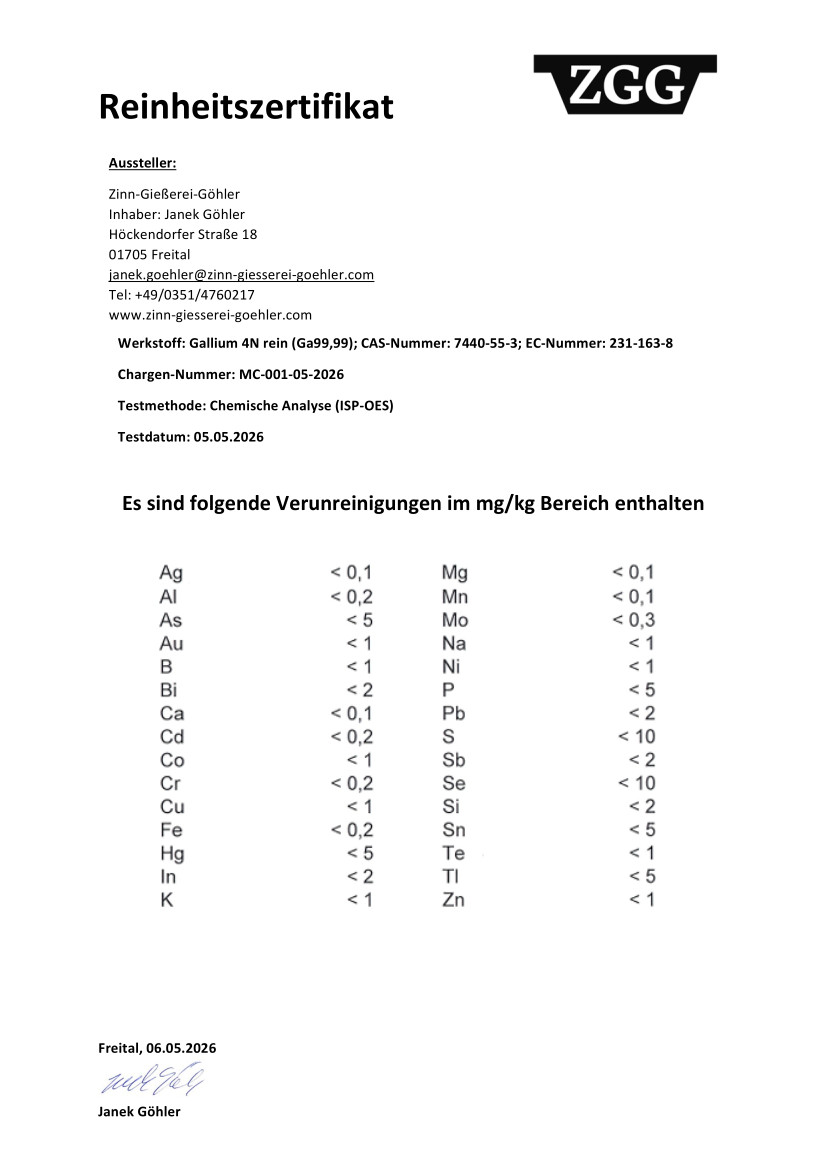
- Includes Certificate of Purity
Original price was: 5.469,49 €.4.922,54 €Current price is: 4.922,54 €. inkl. MwSt.
Description
Gallium 4N Ga99.99 in 1 kg bottles
Purity: min. 4N, 99.99%
Form: Bottled
Weight: min. 1000 g
Melting Point: 29.76 °C
Density: 5.9 g/cm³
This offer includes Gallium with a common purity of 99.99% (4N), packaged in 1 kg bottles. These bottles are labeled and feature a batch number tag. This allows you to precisely match the bottles of a batch to their Certificate of Purity.
This also ensures maximum safety when processing or reselling the Gallium.
Gallium is always solid, despite its low melting point of only 29.76 °C. Should you wish to melt it, it is best to melt the Gallium in a plastic bottle or ceramic crucible, in a warm water bath or with a torch.
Due to its very low melting point and non-toxic nature, Gallium is very popular as a mercury substitute. In metallic form, these alloys with melting points below room temperature are probably the most common use of Gallium. These alloys are used not only as mercury substitutes but also as thermal conductive alloys and similar applications.
However, Gallium is mainly used in its oxidic form or as GaAs in semiconductor crystal growth. Even in these applications, metallic Gallium serves as the starting material.
For larger quantities, we can procure gallium in granules or 1kg bottles; please contact us via our contact form for this.
Gallium is freely available and inherently harmless.
Nevertheless, the following safety markings must be observed:
H290 – May be corrosive to metals.
H302 – Harmful if swallowed.
H412 – Harmful to aquatic life with long lasting effects.
Note: The phrase H302 primarily applies to the irritation of mucous membranes caused by gallium and gallium alloys. Therefore, the item should not be consumed.
We will send you a safety data sheet for this item upon request.
Frequently Asked Questions About Gallium
Is gallium dangerous or toxic?
Gallium is considered non-toxic and freely available, but is slightly harmful if swallowed (H302) and can attack metals (H290) as well as cause long-term harm to aquatic organisms (H412). Compared to mercury, it is significantly safer – hence its popular use as a mercury substitute.
How do you melt gallium safely?
Best in a plastic bottle or ceramic crucible, in a warm water bath or with a burner. Metal containers (especially aluminum) should be avoided, as gallium can corrode them.
Is the stated purity (99.99%) guaranteed?
Yes, each bottle is labeled with a batch number and can be clearly matched to the enclosed purity certificate.
Why is gallium so expensive?
Gallium is a rare by-product of aluminum and zinc production with complex refining to 4N purity (99.99%). The price follows the current commodity market for pure metals. Since 2022, gallium exports from China have been heavily regulated, causing a severe supply shortage. However, as gallium is an important niche metal, demand has remained high.
Are quantity discounts or larger containers available?
Yes – via coupon codes m100 (2% from €100), m300 (5% from €300), and m600 (10% from €600). The m600 quantity discount of 10% is already included in the price. For requirements of 3 kg or more, please contact us directly for an individual quote.
How is gallium shipped – are there any restrictions?
Gallium is not a hazardous material and can be shipped regularly by parcel. The maximum fill quantity of 3 kg per unit for air transport is always well below the limit for 1 kg bottles. The solid bottles are packaged securely for transport, so leakage is not possible (melting point 29.76°C, therefore solid at “normal temperature”).
How long does gallium last / how do I store it?
Gallium has a practically unlimited shelf life and should be stored dry at room temperature (ideally below 29.76°C). Even if temperatures exceed 30°C in summer, for example, this is usually not sufficient to melt 1 kg of gallium over several hours. Gallium can therefore be stored safely in normal rooms.
What is the difference between 4N and 5N gallium?
4N stands for 99.99% purity, 5N for 99.999%. For most applications (mercury substitute, alloys, hobby/experiments), 4N is completely sufficient and significantly cheaper than 5N.
5N or even purer gallium is more relevant in the field of semiconductor material production, e.g. for the manufacture of GaAs.
Can I use gallium as a hobby material?
Yes, gallium is very popular for “magic metal” effects (metal melting in the hand) and experiments due to its low melting point and non-toxic properties. Safety instructions (do not ingest, avoid prolonged skin contact with molten material) should nevertheless be observed.
Is the gallium suitable for industrial purposes (e.g. semiconductors, GaAs)?
Yes, 99.99% pure gallium is the standard starting material for applications in metallic form. For some oxide compounds and GaAs in semiconductor crystal growth, it may be necessary to purify it further.
Additional information
Information on the base price:
Since these are tiered prices, the base price corresponds to the total price for the respective weight/dimension.
Coupon codes
- m100 (2% discount, redeemable for order amounts from €100-€299.99)
- m300 (5% discount, redeemable for order amounts from €300-€599.99)
- m600 (10% discount, redeemable for order amounts from €600)
*Volume discounts can be redeemed in the shopping cart using the codes provided
-

Copper Pieces Cu99.9
Price range: 12,49 € through 39,49 € inkl. MwSt. -
Indium Ingot 100g In99.995
169,49 € inkl. MwSt. -
Pure Tin round Bars
Price range: 10,99 € through 135,49 € inkl. MwSt. -
Bi2O3 Powder 1-5µm
Price range: 11,99 € through 216,49 € inkl. MwSt. -
Gallium 4n round Rods
Price range: 134,99 € through 251,49 € inkl. MwSt. -
Indium Bar 1kg In99.995
1.229,99 € inkl. MwSt.